Why Your Marketing Stops Working After a Few Months? Here’s What You Need to Know
A marketing strategy can work well in the beginning and slowly lose its impact after a few months. This doesn’t always mean the strategy was wrong. Customer behaviour changes, competitors adapt, trends move, and audiences become less responsive to repeated content. This blog explains why marketing performance drops over time and how businesses can keep their strategies fresh, relevant, and effective.
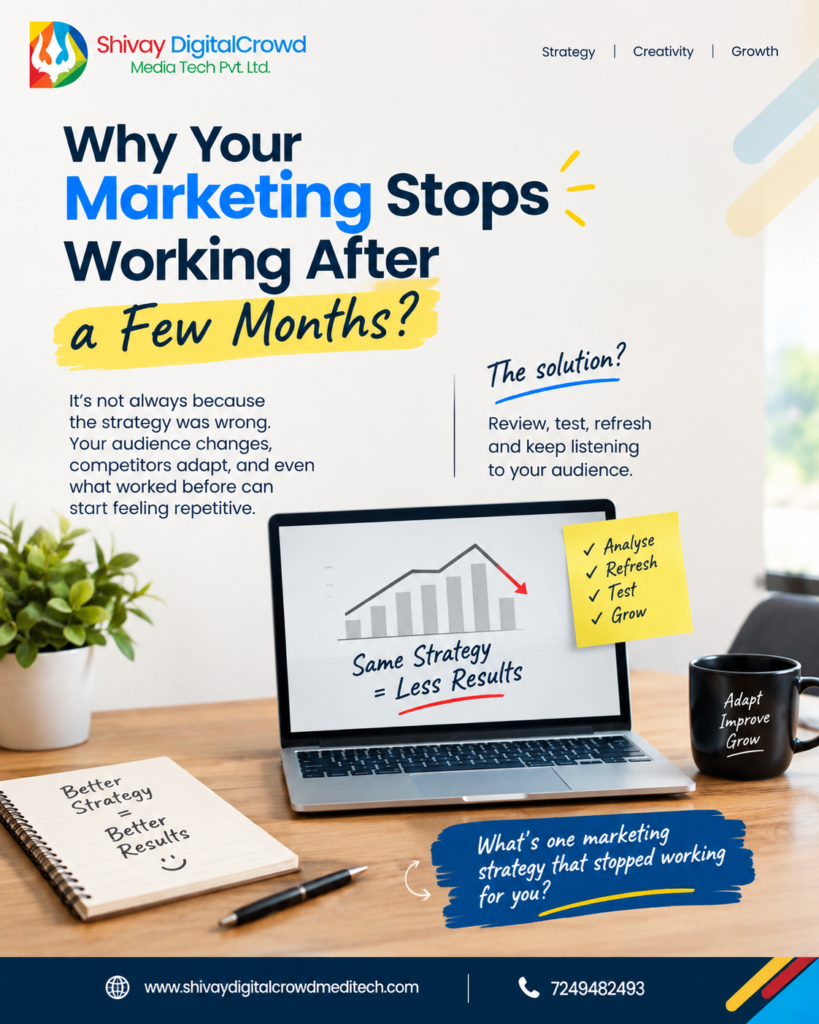
Why Does Marketing Work First and Then Slow Down?
You launch a campaign, get good engagement, receive enquiries, and feel like you’ve found the right strategy.
Then, after a few months, the same approach doesn’t give you the results it used to.
This happens to many businesses.
Marketing is not something you set once and leave running forever. Your customers change, your competitors change, and the platforms you use keep changing too.
A strategy that worked six months ago may simply need some adjustments today.
1. Your Audience Changes
People’s interests and buying behaviour don’t stay the same.
The content that attracted your audience earlier may no longer match what they need now. New customer groups may also enter the market with different expectations.
This is why businesses should regularly look at customer feedback, engagement patterns, search behaviour, and enquiries.
Understanding your audience again can often reveal why the old approach is losing attention.
2. Your Competitors Are Adapting
While you are using the same strategy, your competitors may be testing something new.
They might be creating better content, changing their messaging, improving their website, experimenting with different advertising formats, or communicating with customers in a more relevant way.
You don’t need to copy competitors.
But keeping an eye on what is changing around you can help you identify opportunities and avoid becoming too comfortable with an old strategy.
3. Your Content Starts Feeling Repetitive
Even good content can lose its impact when people see the same message again and again.
Using the same topics, visuals, offers, formats, or communication style for months can make your audience stop paying attention.
This is where content creation needs a fresh approach.
Try different formats, answer new customer questions, share practical information, explain common mistakes, or look at familiar topics from a different angle.
Fresh doesn’t always mean completely new. Sometimes it simply means presenting an idea in a better way.
4. Trends and Platforms Keep Moving
Digital marketing changes quickly.
Search behaviour, social media algorithms, advertising features, content formats, and customer expectations can all shift over time.
For example, a format that once generated strong engagement may gradually become less effective.
This doesn’t mean you need to follow every trend.
It means you should understand which changes actually matter to your audience and adapt when necessary.
5. You Stop Looking at the Data
One of the easiest mistakes is continuing with a strategy simply because it worked before.
Regularly checking your numbers can tell you what is changing.
Look at traffic, engagement, conversion rates, enquiries, campaign performance, and other useful metrics. These numbers can help you identify where people are dropping off and what deserves another test.
This applies across digital marketing services, including SEO, paid advertising, and social media.
How Can You Keep Your Marketing Effective?
You don’t always need a completely new strategy.
Start by reviewing what is currently working and what has slowed down.
Refresh your content. Test new ideas. Listen to customers. Review your competitors. Check your data regularly.
If your website needs improvement, review its structure, content, user experience, and seo services strategy as part of the process.
The goal is not to constantly change everything.
The goal is to know what needs to change and why.
Marketing works best when it evolves with the people you are trying to reach.
A strategy that worked yesterday can still work tomorrow — but sometimes it needs a smarter, more relevant version of itself.