Why Ranking for the Wrong Keyword Can Hurt Your SEO Strategy
Ranking on Google is only valuable when you attract the right audience. Learn why keyword relevance, search intent, and user expectations matter more than simply chasing high search rankings.
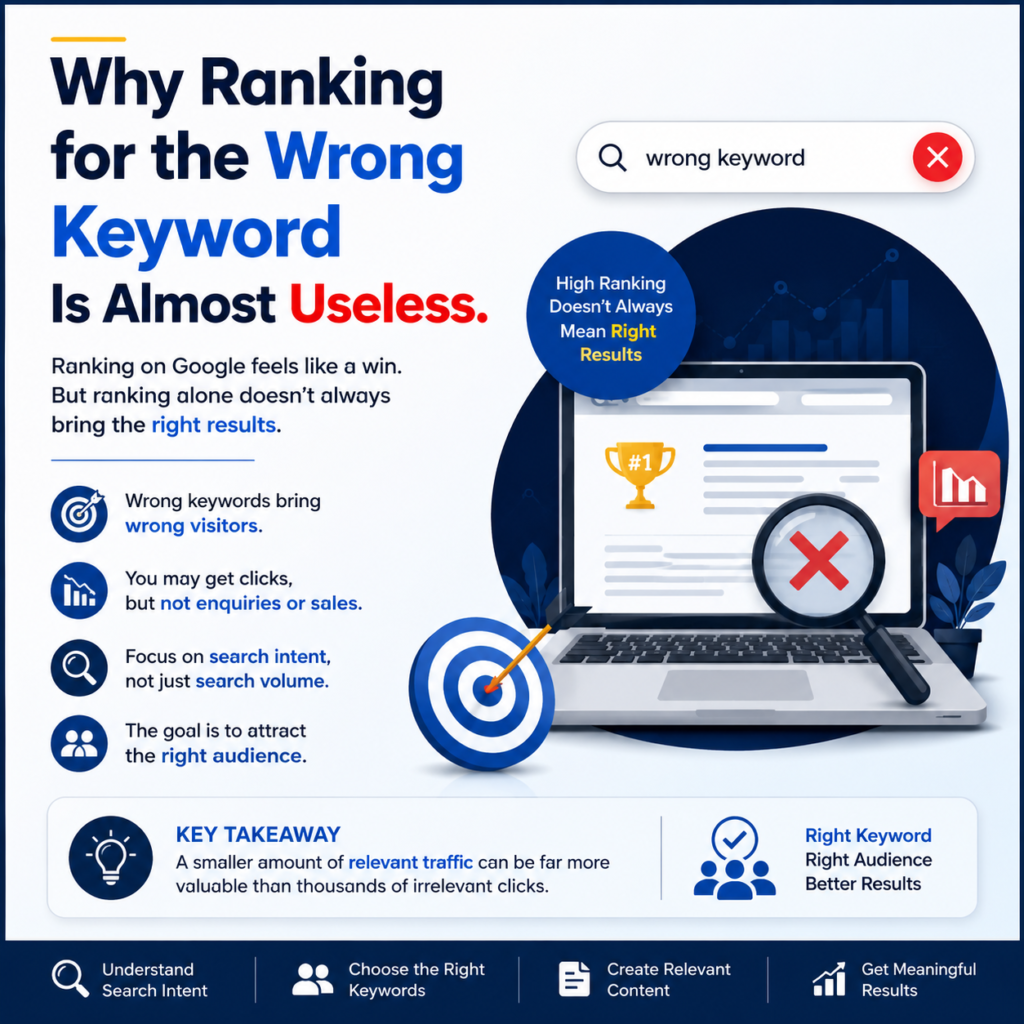
Why Ranking for the Wrong Keyword Is Almost Useless
Getting a website to rank on the first page of Google feels like a major SEO achievement. But there’s an important question that often gets overlooked: Are you ranking for the right keyword?
A high ranking can bring traffic, but traffic alone doesn’t guarantee enquiries, sales, or meaningful engagement. If the people visiting your website aren’t interested in what you offer, even a top position may have very little business value.
This is why keyword relevance should be considered before search volume or ranking position.
Search Intent Matters More Than Search Volume
Every Google search has an intention behind it. Someone might be looking for information, comparing different options, or actively searching for a product or service.
For example, a person searching for “what is SEO” probably wants to learn. Someone searching for “SEO services for small business” may already be considering professional help.
Both keywords can be relevant to SEO, but their intent is different.
Understanding this difference helps you create content that matches what users actually want.
More Traffic Doesn’t Always Mean Better Traffic
It’s easy to get excited when website traffic increases. But analytics should be looked at more carefully.
Imagine a website receives 10,000 visitors from a keyword, but almost nobody contacts the business or explores its services. Another website receives only 1,000 visitors, but those visitors are genuinely interested and several become leads.
Which website is getting better results?
The second one.
This is why SEO should focus on relevant traffic, not traffic numbers alone.
Choose Keywords That Match Your Audience
Before targeting a keyword, ask a few simple questions:
Does this keyword describe what my audience is actually searching for?
Does the content on my website answer that search?
Is the visitor likely to find the information useful?
Does the keyword match the product, service, or topic?
What action might the visitor take after reading the page?
These questions can help prevent a common SEO mistake: choosing keywords simply because they have high search volume.
Local Businesses Need Relevant Local Keywords
Location can also influence search intent. A business serving customers in a specific city may benefit more from relevant local searches than from broad keywords with huge search volumes.
For example, someone looking for marketing support locally may search for terms such as digital marketing agency in Pune or digital marketing services in Pune.
The value of these keywords isn’t simply their search volume. Their relevance comes from connecting the searcher with information that matches their location and needs.
However, adding a location to every page or repeatedly using the same keyword isn’t a good SEO strategy. The keyword should fit naturally within useful, well-written content.
What Should You Focus on Instead?
A strong keyword strategy usually combines three things:
1. Relevance
The keyword should closely match your topic, product, or service.
2. Search Intent
The content should satisfy what the user actually wants to know or do.
3. User Experience
The page should be easy to read, navigate, and understand.
When these elements work together, rankings become more meaningful because they bring people who are more likely to engage with your content.
Final Thoughts
SEO isn’t a competition to collect the highest number of rankings. A website can rank for hundreds of keywords and still struggle to generate meaningful results if those keywords don’t match the audience.
Instead of asking, “How can I rank for this keyword?”, start by asking:
“Why would someone search for this keyword, and can my content genuinely help them?”
That change in thinking can lead to a much more useful SEO strategy.
The goal isn’t simply to attract more visitors. It’s to attract the right visitors with the right intent at the right time.