Traffic Isn’t the Goal: Why Website Visitors Must Take Action
Getting more visitors to your website sounds like success, but traffic alone doesn't guarantee business results. Learn why engagement, user experience, conversions, and the right audience matter more than simply increasing visitor numbers.
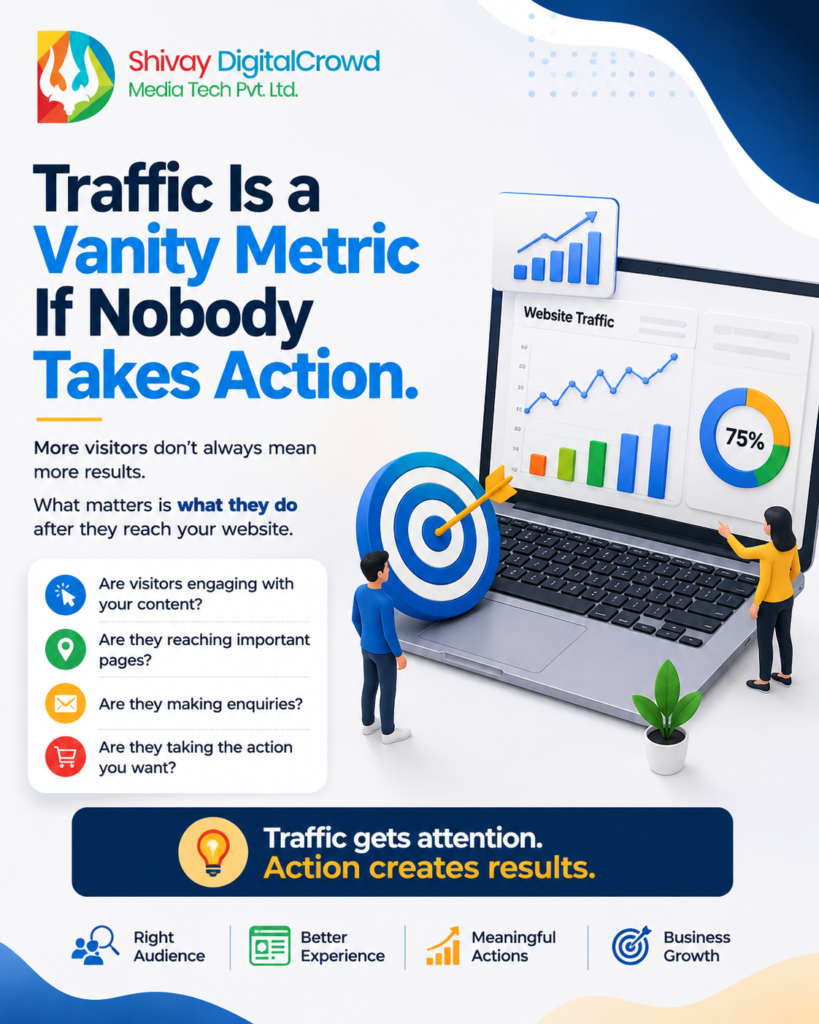
Traffic Isn’t the Goal: Why Website Visitors Must Take Action
Getting more traffic is one of the first things businesses look at when measuring website performance. Seeing visitor numbers increase can feel like a positive sign. But there’s an important question that often gets missed:
What are those visitors actually doing on your website?
A website can receive thousands of visitors every month and still generate very few enquiries, sales, or meaningful actions. On the other hand, a smaller website with highly relevant visitors can generate much better results.
This is why website traffic should never be viewed in isolation.
More Traffic Doesn’t Always Mean Better Results
Imagine two websites.
Website A gets 10,000 visitors every month but generates only 10 enquiries.
Website B gets 2,000 visitors but generates 80 enquiries.
Which website is performing better?
The answer is fairly obvious. Website B is attracting fewer people, but those visitors are more relevant and more likely to take action.
This is an important lesson for businesses: quality of traffic matters as much as quantity.
If the people arriving on your website aren’t interested in what you offer, increasing traffic won’t solve the real problem.
What Happens After Someone Visits Your Website?
Once visitors arrive, their behaviour becomes much more important.
Are they reading your content?
Are they exploring other pages?
Are they checking your services?
Are they contacting you?
Are they filling out a form or making a purchase?
These actions provide a much clearer picture of whether your website is actually doing its job.
Tools such as Google Analytics and other website analytics platforms can help businesses understand where visitors come from, which pages they visit, how long they stay, and where they leave.
Looking at these patterns can reveal problems that traffic numbers alone can’t show.
User Experience Can Change Everything
Sometimes the problem isn’t the traffic. It’s the website experience.
A visitor might be genuinely interested in your service but leave because the page takes too long to load, the information is difficult to find, or there isn’t a clear next step.
A good website should make the visitor’s journey simple.
The information should be easy to understand. Navigation should feel natural. Important pages should load quickly, and calls-to-action should be clear without being pushy.
Even small improvements to the user experience can make a difference in how visitors interact with a website.
Focus on the Right Audience
Another important factor is audience relevance.
Getting visitors who have no connection to your product or service doesn’t create much value.
For example, a local business may benefit more from reaching 500 people who are genuinely interested in its services than from reaching 10,000 random visitors.
This is where SEO, content marketing, social media, and paid advertising need to work together.
The goal shouldn’t simply be to attract more people.
The goal should be to attract people who are likely to care.
Measure Actions, Not Just Visitors
Website traffic is still an important metric. It can help you understand whether your visibility and marketing efforts are improving.
But it should be considered alongside other metrics such as:
Engagement
Conversion rate
Enquiries
Form submissions
Product purchases
Time spent on important pages
Returning visitors
Looking at these numbers together gives you a much clearer understanding of website performance.
The Real Goal of Website Traffic
Traffic gets people through the door. What happens after that is what really matters.
A successful website isn’t necessarily the one with the biggest visitor count. It’s the one that attracts the right audience, provides a useful experience, and encourages visitors to take meaningful action.
So the next time your website traffic increases, don’t stop at the number.
Ask a better question:
“What did those visitors do after they arrived?”
That answer can tell you far more about your digital marketing performance than traffic alone.