Cheap Leads vs Quality Leads: Why Lead Quality Matters More Than Quantity
Getting more leads sounds like a good result, but numbers alone don't tell the full story. A low-cost lead may look impressive in a marketing report, yet fail to bring real business. Quality leads are different — they come from people who genuinely need what you offer and are more likely to take the next step. Understanding the difference between cheap leads and good leads can help businesses make better marketing decisions, improve conversions, and use their budget more effectively.
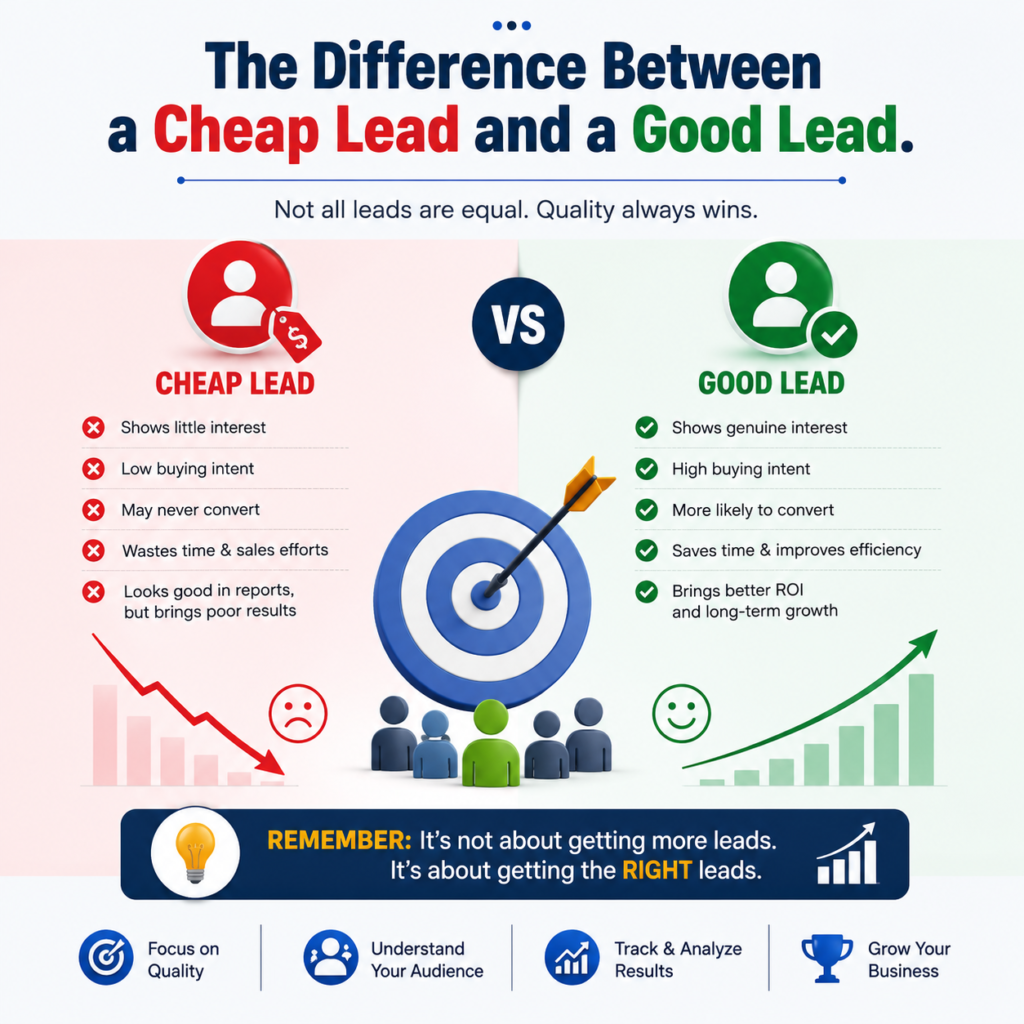
The Difference Between a Cheap Lead and a Good Lead
Getting leads is one of the main goals of digital marketing. But there’s an important question that often gets overlooked: Are all leads actually valuable?
Imagine running an advertising campaign and generating 100 leads at a very low cost. At first glance, that sounds like a successful campaign.
But then the sales team starts calling.
Most people don’t answer. Some aren’t interested. Others were simply looking for information, while a few may not even remember filling out the form.
Now compare that with another campaign that generated only 20 leads. The cost per lead was higher, but several people were genuinely interested and a few became customers.
Which campaign performed better?
The answer is clear: the campaign that generated better-quality leads.
What Is a Cheap Lead?
A cheap lead is usually someone who enters your marketing funnel at a low acquisition cost.
They might fill out a form, click an advertisement, request information, or send an enquiry. The problem is that a low cost doesn’t necessarily mean high intent.
Cheap leads can happen when campaigns focus too heavily on getting more submissions without considering who is actually submitting them.
For example, an advertisement may attract a large number of people because the offer looks interesting. But if those people aren’t the right audience, the business may spend more time following up with people who were never likely to buy.
That’s where the real cost starts to appear.
What Makes a Lead a Good Lead?
A good lead isn’t simply someone who submits a form.
A quality lead usually has a genuine need, fits the target audience, understands what they are looking for, and has some level of buying intent.
These leads are more valuable because they have a better chance of moving through the sales process.
Think of it this way:
Cheap lead = lower acquisition cost
Good lead = higher potential business value
The two aren’t always the same.
Why Lead Quality Matters
When businesses focus only on the number of leads, they can miss what happens after the lead is generated.
A better approach is to look at the complete journey.
Ask:
How many leads actually respond?
How many are qualified?
How many become opportunities?
How many eventually become customers?
What revenue comes from those customers?
These numbers tell a much more useful story than Cost Per Lead alone.
A campaign generating fewer leads can actually produce better results if those leads are relevant and have stronger purchase intent.
How to Improve Lead Quality
Improving lead quality doesn’t always require spending more money.
Start by understanding your ideal customer.
Then make sure your advertising message speaks directly to that audience. Your landing page should clearly explain what you’re offering, and your lead form should collect information that helps identify serious prospects.
Most importantly, don’t be afraid to test.
Try different audiences, creatives, messages, and offers. Then compare not just the number of leads, but what happens after those leads enter your sales process.
The Bigger Picture
Marketing isn’t really about collecting the biggest possible number of names and phone numbers.
It’s about connecting the right people with the right message at the right time.
A campaign with 100 leads may look better on paper than one with 20. But if those 20 leads are more relevant, more engaged, and more likely to become customers, the smaller campaign may actually be the stronger one.
So the next time you review your marketing results, don’t ask only:
“How many leads did we get?”
Ask a better question:
“How many of those leads were actually worth having?”
That shift from lead quantity to lead quality can change the way you evaluate your entire marketing strategy.