Why People Visit Your Website but Never Become Customers
Getting visitors to your website is only the first step. The real challenge is turning those visitors into customers. Unclear messaging, slow loading speed, lack of trust, and confusing navigation can stop people from taking action. Learn how to improve your website experience and make it easier for visitors to enquire, book, or buy.
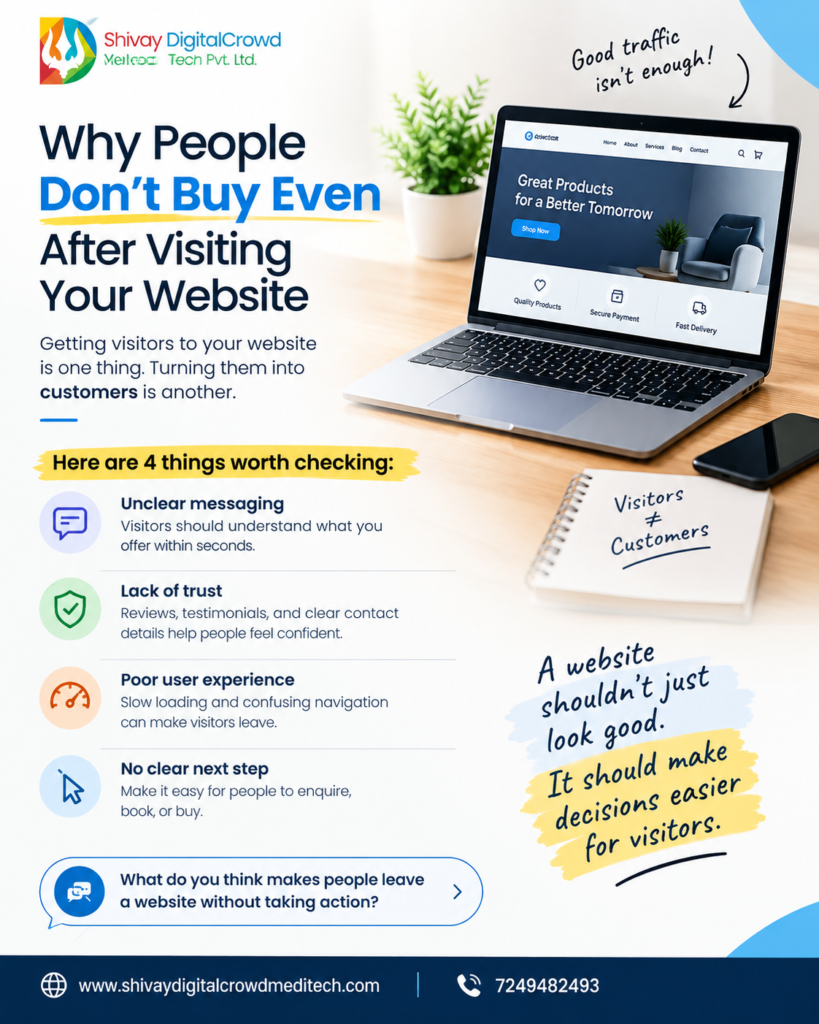
Why People Visit Your Website but Never Become Customers
You have a website. People are visiting it. Your analytics show traffic, but enquiries and sales are still low.
What could be going wrong?
Many businesses focus on bringing more visitors to their websites but overlook what happens after someone arrives. More traffic does not automatically mean more customers. Sometimes, a few simple improvements can make a bigger difference than spending more money to attract visitors.
Let’s look at some common reasons why people leave a website without taking action.
1. Visitors Cannot Understand What You Offer
Imagine someone opens your website for the first time. They should be able to understand what your business offers within a few seconds.
If the message is confusing, too general, or hidden behind too much text, visitors may leave without exploring further.
Keep your main message simple. Explain what you offer, who it helps, and what problem it solves.
Clear communication gives visitors a reason to stay and learn more about your business.
2. Your Website Does Not Build Enough Trust
People are careful about where they spend their money. Before contacting a business or making a purchase, they often look for signs that it is genuine and reliable.
An incomplete website, outdated information, missing contact details, or unclear business information can create doubts.
You can improve trust by adding genuine customer reviews, testimonials, accurate contact information, service details, and examples of your work.
Small details matter because visitors need to feel comfortable before taking the next step.
3. A Poor User Experience Pushes People Away
Have you ever opened a website that took too long to load or made it difficult to find basic information?
You probably did not spend much time on it.
Your visitors may behave the same way.
A website should load quickly, work smoothly on mobile devices, and make important information easy to find. Menus should be simple, pages should be readable, and visitors should not have to search for basic details.
A good user experience helps people focus on what they came to find instead of struggling with the website.
4. Visitors Do Not Know What to Do Next
Someone might be interested in your service but still leave because the next step is unclear.
Should they call you, fill out a form, book an appointment, or send a message?
Give visitors a clear and relevant next step. Use simple calls to action such as “Request a Quote,” “Contact Us,” or “Book an Appointment,” depending on your business.
Keep enquiry forms short and ask only for information you genuinely need.
The easier you make the process, the fewer unnecessary barriers visitors face.
5. Your Content Does Not Answer Their Questions
People visit websites because they want information, solutions, or a product that meets their needs.
If your content only talks about your business without addressing customer concerns, visitors may not find enough value to continue.
Helpful blogs, clear service descriptions, frequently asked questions, and practical guides can answer questions before someone contacts you.
For businesses working with a **Digital Marketing Agency in Pune**, understanding customer needs is an important part of building a website and online strategy that supports meaningful enquiries.
6. You Are Not Checking What Visitors Actually Do
Guessing why people leave will not always solve the problem.
Look at website analytics to understand which pages attract visitors, where people leave, and which pages generate enquiries. Test improvements one at a time so you can understand what makes a difference.
For example, you could simplify a contact form, improve a headline, or make a service page easier to navigate.
Businesses can also use digital marketing services, seo services, social media marketing services, and content creation to support their wider online strategy. However, these efforts work best when the website gives visitors a clear and useful experience.
Final Thoughts
Your website should do more than look professional or attract traffic. It should help visitors understand your offer, build confidence, find useful information, and take the next step.
Before investing more in traffic, take a fresh look at your website from a visitor’s perspective.
Ask yourself one simple question:
“If I were visiting this website for the first time, would I feel confident enough to take action?”
Your answer could reveal the improvement your website needs most.