Before You Spend on Ads: 7 Things to Check Before Launching Your Campaign
Running ads without proper planning can waste your budget and bring disappointing results. Before launching your next campaign, understand these seven important factors that can help you make smarter advertising decisions, reach the right audience, and measure what is actually working.
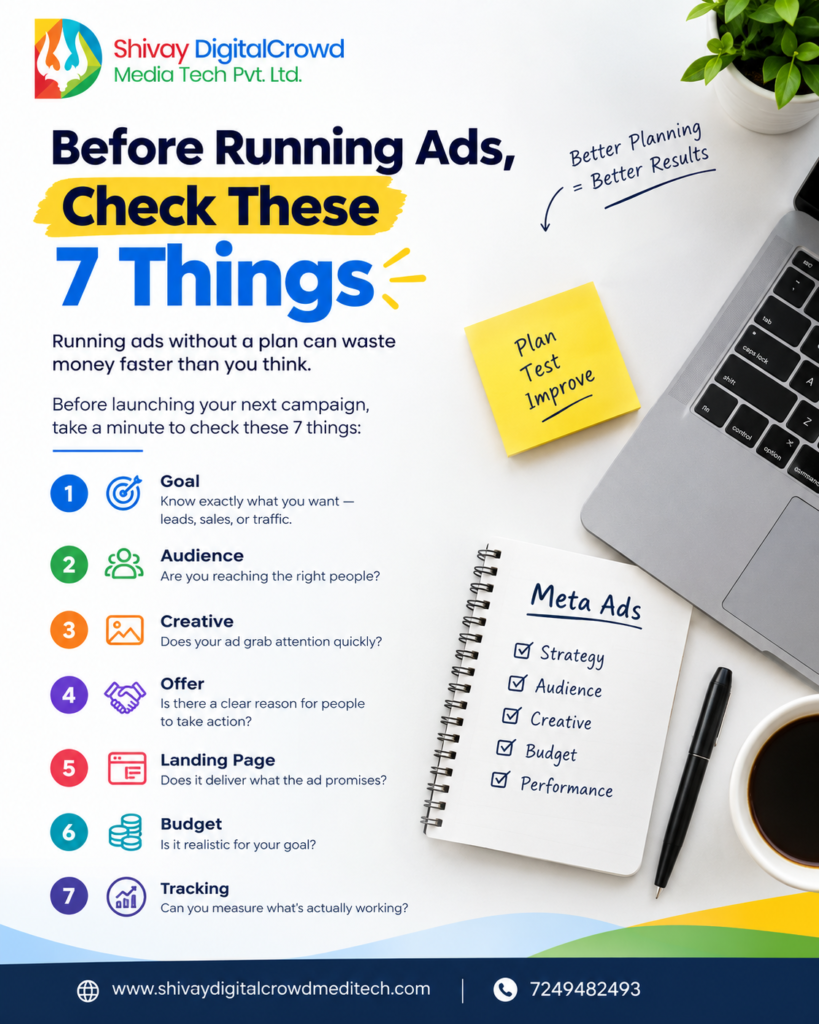
Running Ads Without a Plan Can Cost More Than You Think
Have you ever seen a business spend money on online ads but struggle to get the results it expected?
Sometimes, the problem isn’t the budget. It could be the campaign objective, audience, ad creative, or even the page people visit after clicking the ad.
Advertising platforms provide businesses with many opportunities, but simply launching a campaign doesn’t guarantee success.
Before spending your money, there are seven things worth checking.
1. Be Clear About Your Campaign Goal
Start by asking yourself one simple question: What do I want this campaign to achieve?
Some businesses want more people to know about their brand. Others want website visits, enquiries, or direct sales.
Each goal requires a different approach.
For example, if your main objective is to generate customer enquiries, a campaign focused only on website traffic may not be the best starting point.
Choose an objective that matches the result you actually want.
2. Understand Your Target Audience
Your advertisement doesn’t need to reach everyone. It needs to reach people who are likely to be interested in what you offer.
Think about their needs, interests, location, challenges, and buying behaviour.
For example, a local restaurant promoting a lunch offer should focus on people who can realistically visit the restaurant.
Understanding your audience helps you create relevant messages instead of spending money reaching people who may never become customers.
3. Create an Ad That Gets Attention
People scroll through social media quickly. If your advertisement doesn’t communicate its message clearly, they may simply move on.
Use a strong opening line, a clear visual, and a message that addresses a genuine customer problem.
Avoid filling your creative with too much text or too many unrelated offers.
Good content creation starts with understanding what your audience wants to know, not just what your business wants to say.
Before launching, ask someone unfamiliar with your business to look at the ad. Can they understand the main message within a few seconds?
4. Give People a Reason to Take Action
Even a well-designed advertisement can struggle if the offer isn’t relevant.
People need to understand what they will get and why it is worth their time.
Depending on your business, this could be a useful consultation, a product demonstration, a special service package, or simply a clear explanation of your solution.
Keep the message honest and avoid promises you cannot deliver.
A relevant offer builds more confidence than exaggerated claims.
5. Check Your Landing Page
Imagine someone clicks your ad but lands on a slow website with confusing information. There is a good chance they will leave without taking action.
Your landing page should match the advertisement’s message.
Make sure the page loads properly on mobile devices, explains the offer clearly, and makes it easy to contact your business or complete the next step.
Along with your paid campaigns, effective seo services can help improve how people discover and navigate your website through organic search.
However, organic search and paid advertising serve different purposes, so they should be measured accordingly.
6. Set a Realistic Budget
A larger budget doesn’t automatically mean better results.
Start with a budget that your business can afford to test, and give the campaign enough time and data to evaluate its performance.
Avoid changing the budget, audience, and creative all at once. Otherwise, it becomes difficult to understand which change influenced the results.
If you’re working with a limited budget, focus on learning what works before increasing your spending.
7. Track the Right Numbers
Clicks and impressions can tell you whether people are seeing or interacting with your advertisement, but they don’t tell the whole story.
Depending on your campaign goal, track metrics such as cost per lead, conversion rate, qualified enquiries, and return on ad spend.
Review the quality of the results, not just the quantity.
Businesses using digital marketing services should connect campaign performance with actual business outcomes wherever possible.
A campaign that generates fewer but more relevant enquiries may be more valuable than one producing many enquiries that never convert.
Final Thoughts
Successful advertising isn’t simply about spending more money or reaching more people.
It’s about understanding your goal, knowing your audience, communicating clearly, and learning from the results.
Before launching your next campaign, take a few minutes to review these seven points.
Small improvements in planning can help you avoid unnecessary mistakes and make more informed decisions over time.
For businesses exploring online growth, working with a Digital Marketing Agency in Pune may also help bring structure to campaign planning, execution, and performance measurement.
The most important lesson is simple: don’t just launch an advertisement and hope for the best. Know what you want to achieve, measure what happens, and use those insights to improve your next decision.