What Makes a Landing Page Effective? 7 Things That Turn Visitors Into Action
A good landing page is not just about attractive design. It should quickly explain the value, build trust, answer the visitor’s questions, and make the next step simple. Here are the key elements that can make a landing page more useful and effective.
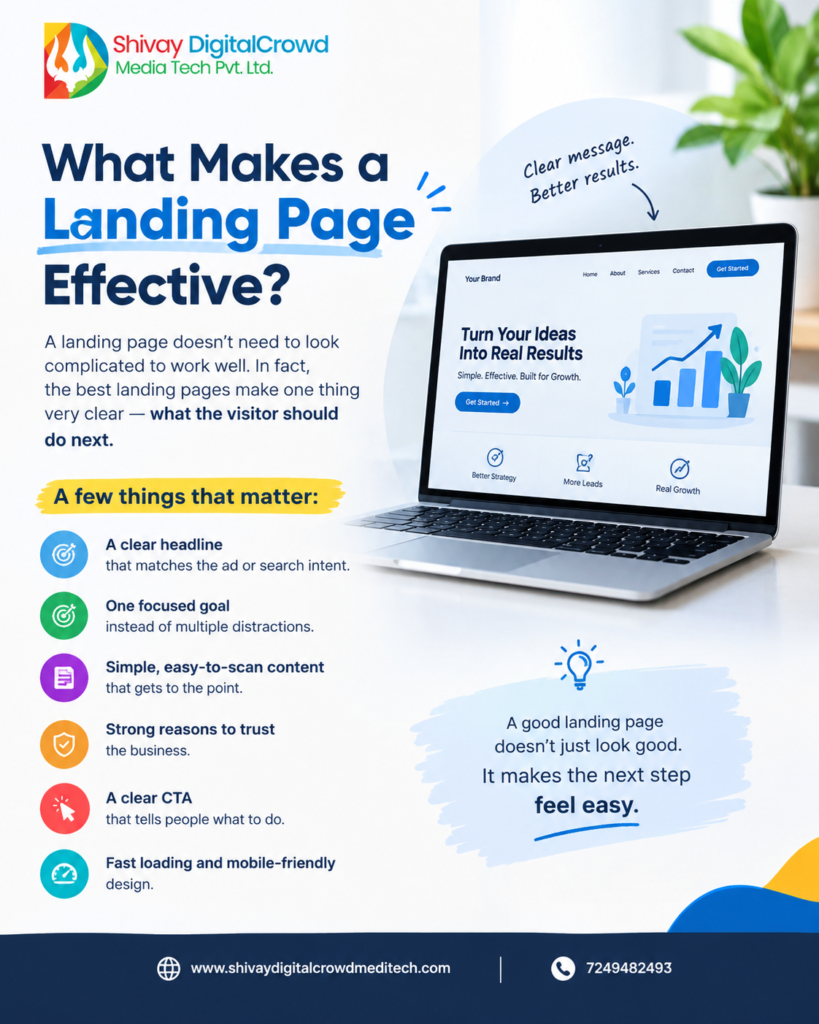
What Makes a Landing Page Effective?
A landing page can look impressive and still fail to generate results.
The reason is simple.
Visitors don’t come to a landing page just to admire the design.
They come looking for something specific.
They may want more information, compare an option, download something, book a service, or simply understand whether the offer is right for them.
A good landing page helps them make that decision without making the process complicated.
1. Start With a Clear Headline
The headline is usually one of the first things a visitor notices.
It should immediately explain what the page is about and why the visitor should care.
Avoid complicated words or clever headlines that leave people guessing.
A simple and direct message often works better.
The headline should also match the message that brought the visitor to the page.
If an advertisement promises one thing and the landing page talks about something completely different, people may leave quickly.
2. Give the Page One Clear Goal
One common mistake is trying to put everything on one landing page.
Multiple offers, different buttons, too many links, and unrelated information can create confusion.
A focused landing page should have one main purpose.
It could be getting an enquiry, booking a consultation, downloading a guide, or making a purchase.
When the goal is clear, the visitor knows what to do next.
3. Explain the Value Quickly
People don’t usually read every word on a webpage.
They scan.
That’s why the important information should be easy to find.
Explain what the visitor gets, how it helps them, and why it may be relevant to their situation.
Short sections, useful headings, bullet points, and simple language can make the information much easier to understand.
4. Build Trust Before Asking for Action
Visitors may not know your business yet.
Before asking them to submit a form or contact you, give them reasons to feel comfortable.
Reviews, testimonials, useful information, client experiences, trust signals, and clear business details can help reduce uncertainty.
Trust doesn’t need to be exaggerated.
It should feel genuine and easy to verify.
5. Make the CTA Easy to Understand
A call-to-action should tell visitors exactly what happens next.
Instead of using vague buttons, make the action clear.
For example, “Get the Details,” “Book a Consultation,” or “Request Information” gives more context than a generic button.
The CTA should also be easy to find without making the page feel pushy.
6. Don’t Ignore Mobile Users
A landing page may look perfect on a desktop but become difficult to use on a phone.
This matters because many people discover businesses through mobile searches, ads, and social platforms.
Check the text size, buttons, images, forms, spacing, and loading speed on smaller screens.
A good mobile experience should feel just as simple as the desktop version.
7. Keep Improving With Real Data
Even a well-designed landing page may not perform perfectly from the beginning.
Look at what visitors are doing.
Are they leaving quickly?
Are they reaching the form?
Are they clicking the CTA?
Are they completing the desired action?
These insights can help identify what needs improvement.
Businesses investing in digital marketing services often focus heavily on getting traffic, but the landing page determines what happens after that traffic arrives.
The same principle applies to SEO services, social media marketing services, and paid campaigns.
Driving people to a page is only one part of the process.
The page itself needs to answer their questions and make the next step feel natural.
Good content also plays an important role.
Thoughtful content creation should not simply fill space on a page.
It should help visitors understand, trust, and decide.
Ultimately, an effective landing page doesn’t need to be complicated.
It needs to be clear.
It needs to be useful.
And most importantly, it needs to make the visitor’s next step easy.