Meta Ads vs LinkedIn Ads: Which Platform Is Better for Lead Generation?
Choosing between Meta Ads and LinkedIn Ads depends on your target audience, business type, campaign objective, and lead quality requirements. While Meta Ads offer broad reach and flexible targeting, LinkedIn Ads provide professional and B2B-focused targeting. Understanding the difference can help businesses build a more effective lead generation strategy.
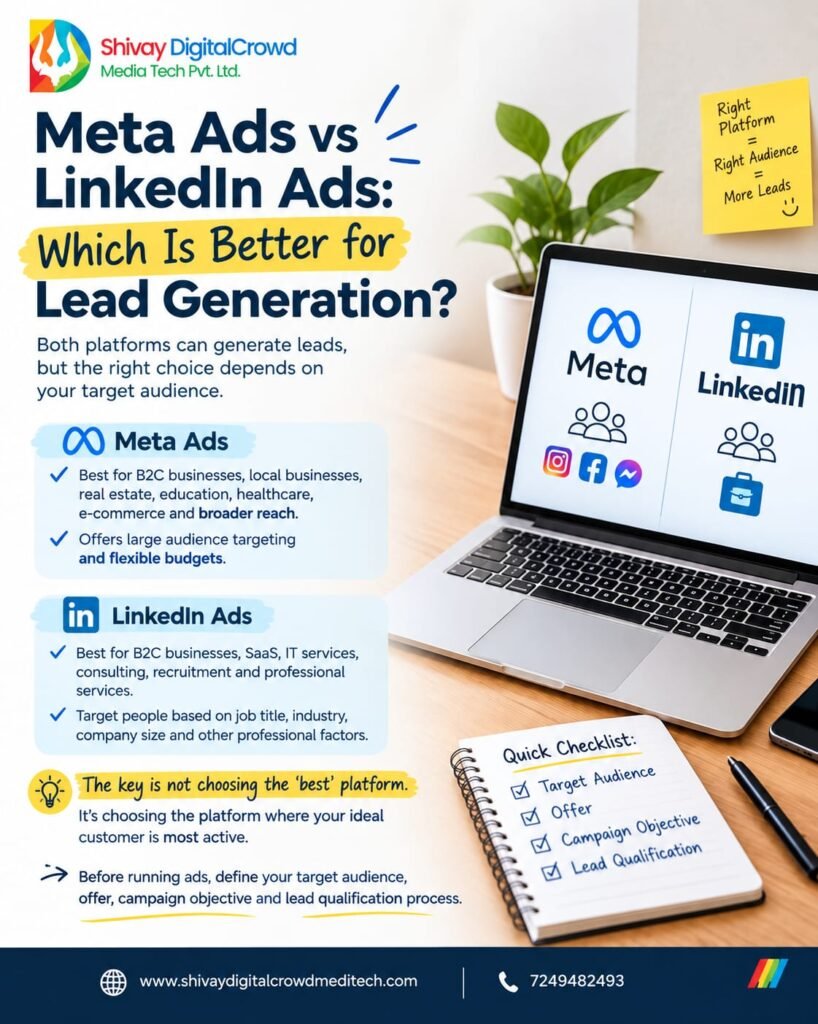
Meta Ads vs LinkedIn Ads: Which Platform Is Better for Lead Generation?
In today’s competitive digital environment, generating quality leads is one of the biggest challenges for businesses. Paid advertising can help businesses reach potential customers faster, but choosing the right advertising platform is equally important.
Two popular platforms for lead generation are Meta Ads and LinkedIn Ads. Both platforms can generate leads, but they work differently and are suitable for different types of businesses.
So, Meta Ads vs LinkedIn Ads — which platform should your business use?
The answer depends on your target audience, business model, campaign objective, budget, and lead qualification process.
What Are Meta Ads?
Meta Ads allow businesses to advertise across platforms such as Facebook and Instagram. They are widely used by B2C businesses, local businesses, real estate companies, education institutes, healthcare businesses, e-commerce brands, and service providers.
One of the biggest advantages of Meta advertising is its large audience reach. Businesses can create campaigns based on factors such as location, interests, demographics, behaviours, and other available audience signals.
For example, a real estate business targeting customers in Pune can use Meta Lead Ads to generate inquiries for properties, plots, or apartments.
Meta Ads can be useful when the goal is to generate a larger volume of leads while maintaining a flexible advertising budget.
What Are LinkedIn Ads?
LinkedIn Ads are designed around a professional audience, making the platform particularly relevant for B2B lead generation.
Businesses can reach professionals based on factors such as job title, industry, company characteristics, seniority, and other professional attributes available through LinkedIn’s advertising system.
This makes LinkedIn particularly relevant for businesses offering:
SaaS solutions
IT services
Business consulting
Recruitment services
Professional services
Enterprise solutions
B2B products
For example, an IT company selling software solutions to decision-makers may use LinkedIn lead generation campaigns to reach relevant professionals.
Meta Ads vs LinkedIn Ads: Key Difference
The biggest difference is the type of audience and targeting approach.
Meta Ads are generally useful when businesses want broader consumer or local-market reach and flexible campaign options.
LinkedIn Ads can be useful when a business needs to reach a specific professional or B2B audience.
However, choosing a platform should not be based only on the potential number of leads.
More leads do not always mean better results.
Lead quality, conversion rate, customer value, and sales follow-up are also important.
Which Platform Should You Choose?
Instead of asking which platform is universally better, businesses should ask:
“Where is my ideal customer most active?”
If your customers are consumers, local customers, homeowners, students, patients, or general audiences, Meta Ads may be relevant to your lead generation strategy.
If your customers are business owners, managers, professionals, or decision-makers, LinkedIn Ads may be relevant for your B2B marketing strategy.
In some cases, businesses can also use both platforms as part of a broader digital marketing strategy.
Conclusion
There is no single advertising platform that works for every business. Successful lead generation campaigns start with understanding the audience and then selecting the right platform, offer, campaign objective, and lead qualification process.
Whether you choose Meta Ads or LinkedIn Ads, focus on more than just generating leads. Track cost per lead (CPL), lead quality, conversion rate, and sales results to understand the actual performance of your campaigns.
The right platform is not simply the one that generates the most leads — it is the one that helps you reach the right audience with the right message at the right time.