The Difference Between Search Intent and Keywords: What Actually Matters in SEO
Keywords tell search engines what people type, but search intent explains what they actually want. Understanding this difference can help businesses create more useful content, improve user experience, and build a stronger SEO strategy.
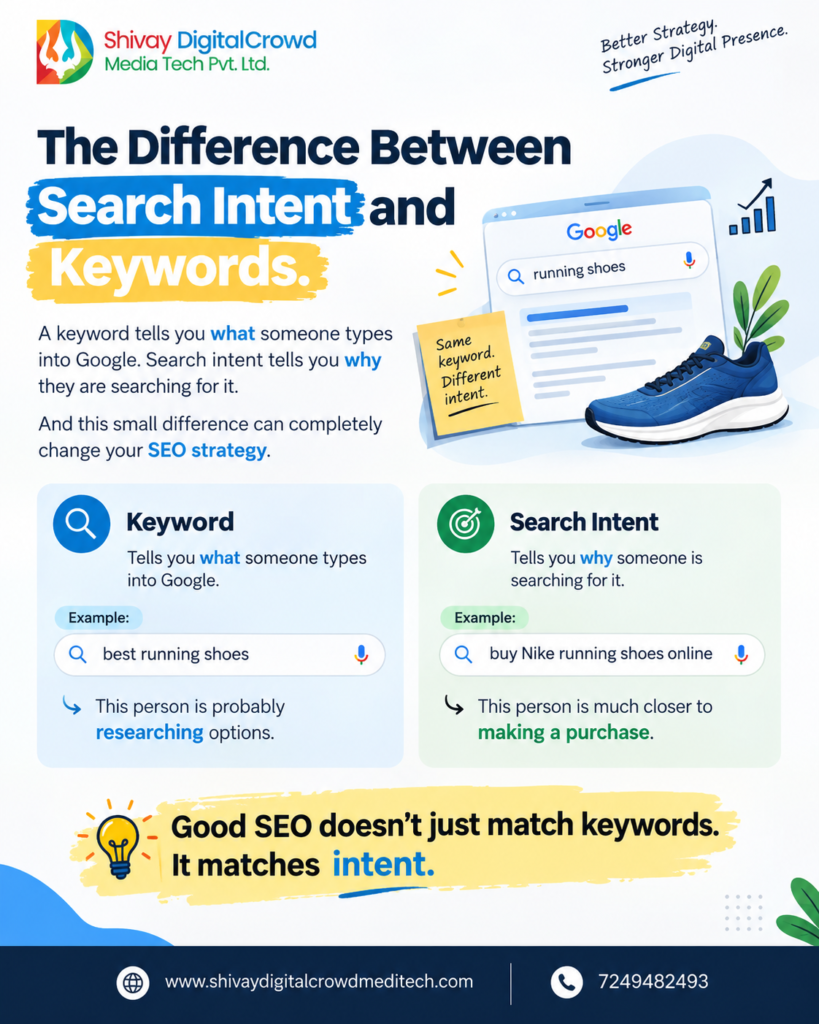
When someone searches something on Google, they usually have a reason behind that search.
They may be looking for information.
They may be comparing different options.
They may be trying to find a specific product or service.
Or they may already be ready to make a purchase.
This is where search intent becomes important.
A lot of businesses focus heavily on finding popular keywords and adding them to their website.
But there is another question worth asking:
What does the person actually want when they search that keyword?
That answer is search intent.
Keywords Tell You What People Search
A keyword is simply the word or phrase a person enters into a search engine.
For example:
“best running shoes”
This tells us what the person is searching for.
But it doesn’t tell us everything.
The person could be researching different brands.
They could be comparing prices.
They could be looking for recommendations.
They may not be ready to buy anything yet.
So, targeting the keyword alone doesn’t give us the complete picture.
Search Intent Tells You Why They Search
Now consider another search:
“buy Nike running shoes online”
The keyword is still related to running shoes, but the intent is very different.
This person is probably much closer to making a purchase.
That difference matters when creating website content.
A blog post may work well for someone researching options, while a product page may be more suitable for someone who already knows what they want to buy.
The better you understand the intent, the easier it becomes to create content that actually answers the user’s need.
Why Search Intent Matters for SEO
Search engines are not simply trying to match words anymore.
They are trying to understand what users are looking for and provide useful results.
This means businesses need to think beyond keyword volume.
A keyword may have thousands of searches every month, but if the content doesn’t match what users expect, it may struggle to perform well.
For example, if someone searches for “how to choose running shoes”, showing them a page that immediately pushes a product may not satisfy their search.
They are looking for guidance first.
A helpful article explaining shoe types, fit, comfort and common mistakes would be a better match.
How to Use Search Intent in Your Content
Before creating a page or blog, start by understanding the search behind the keyword.
Ask yourself:
What is the person trying to learn?
Are they comparing options?
Are they looking for a specific website or business?
Are they ready to purchase?
Once you understand this, you can create content around their actual need.
This approach also makes your website more useful because visitors aren’t forced to search through multiple pages to find a simple answer.
Search Intent Can Improve the User Experience
Good SEO isn’t only about attracting visitors.
It is also about what happens after they arrive.
If someone finds exactly what they were looking for, they are more likely to stay, explore other pages and remember the website.
That is why digital marketing services should not focus only on traffic numbers.
The quality and relevance of that traffic matter too.
The same principle applies to seo services, social media marketing services, and content creation.
Every piece of content should have a clear purpose and should be created with a real person in mind.
The Simple Takeaway
Keywords are still important.
But keywords alone are not enough.
The real value comes from understanding the person behind the search.
Before targeting a keyword, take a moment to understand the question, problem or goal behind it.
Because at the end of the day, people don’t search Google just to find keywords.
They search because they want answers.
And the websites that provide those answers clearly and naturally have a much better chance of creating a useful experience.