Why Businesses Get Likes but Don’t Get Customers: Understanding What Really Drives Results
Likes and engagement can look impressive, but they don’t always translate into enquiries or sales. Learn how businesses can move beyond vanity metrics and focus on audience targeting, useful content, trust, website experience, and measurable marketing strategies that support real business growth.
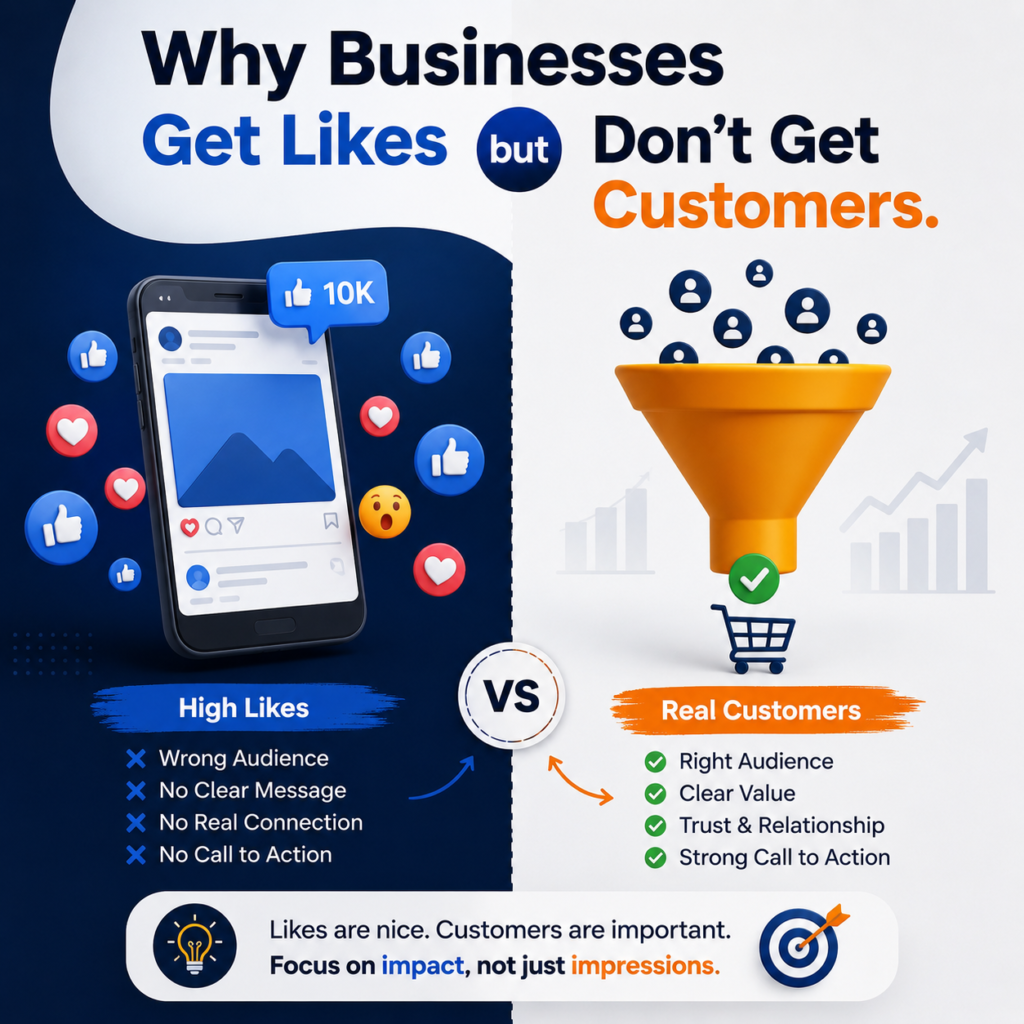
Why Likes Don’t Always Lead to Customers
Getting hundreds or even thousands of likes on a social media post can feel like a success. But likes alone don’t tell the full story.
A business can have strong engagement and still struggle to generate enquiries, website visits, or sales. The reason is simple: attention and action are two different things.
Marketing becomes more effective when businesses focus not only on how many people see or like their content, but also on what those people do afterwards.
Engagement Is Only One Part of the Picture
Likes, comments, shares, and followers are useful indicators of audience interest. However, they should not be the only metrics used to evaluate marketing performance.
For example, a post may receive a high number of likes because it is entertaining, but those users may have no interest in buying the product or service.
This is why businesses should look at metrics such as:
Website enquiries
Qualified leads
Conversion rate
Website engagement
Cost per lead
Customer acquisition cost
These numbers provide a clearer picture of whether marketing activity is contributing to business goals.
Reach the Right Audience
Having a large audience isn’t necessarily an advantage if the audience isn’t relevant.
A smaller group of people who genuinely need a product or service can be more valuable than thousands of users who have no intention of becoming customers.
Audience research helps businesses understand customer needs, interests, problems, and buying behaviour. This information can then be used to create more relevant campaigns and content.
Create Content That Solves Problems
People don’t always want to see another sales message.
Useful content can answer questions, explain confusing topics, compare options, share practical tips, or help someone make a better decision.
This is where social media marketing services can play an important role when the focus is on educating and engaging the right audience rather than simply posting promotional content.
When content consistently provides value, it can gradually build familiarity and trust.
Your Website Matters Too
Social media may bring someone to your website, but the website has to continue the journey.
Visitors should be able to quickly understand what the business offers, find important information, and navigate easily. Slow pages, unclear messaging, poor mobile design, or confusing navigation can cause potential customers to leave.
A good website should answer the questions customers are most likely to have before they decide to contact a business.
Paid Marketing Needs a Clear Strategy
Paid campaigns can help businesses reach specific audiences, but simply increasing the advertising budget doesn’t guarantee better results.
Whether using Meta Ads or other advertising platforms, businesses need clear objectives, relevant audiences, strong creative content, and regular testing.
Similarly, paid marketing services should be evaluated based on meaningful outcomes rather than impressions and clicks alone.
Search Visibility Builds Long-Term Value
Not every customer discovers a business through social media. Many start with a search.
A strong search strategy helps businesses appear when people are actively looking for information, products, or services. Good seo services focus on search intent, useful content, technical website performance, and a positive user experience.
This is especially important for businesses competing in a specific local market.
Focus on Business Outcomes
Digital marketing works best when every activity has a clear purpose.
A digital marketing agency in Pune may use different channels to help a business reach its audience, but the underlying principle remains the same: understand the customer, provide value, measure results, and improve based on data.
Likes are encouraging, but they are only one part of the journey.
The real question isn’t “How many people liked this?”
It’s “Did this marketing activity help the right people take the next step?”
That shift in thinking can help businesses build marketing strategies that focus on meaningful results instead of surface-level numbers.